

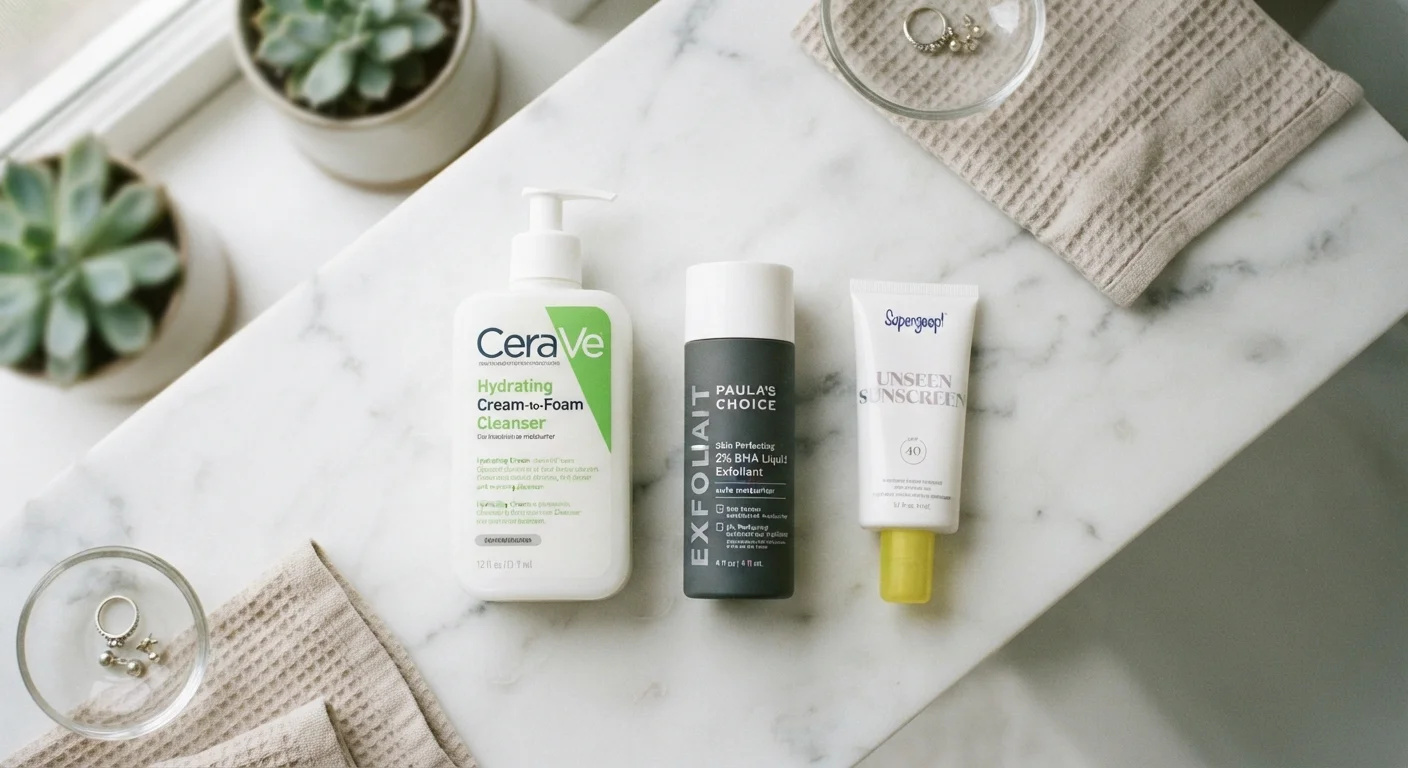
Why Layering Order Actually Matters
Skincare isn't just about which products you use — it's about when you apply them. Layering in the wrong order can prevent active ingredients from reaching the skin, reduce a product's effectiveness, or cause unnecessary irritation. The general principle: go thinnest to thickest, and water-based before oil-based.
Think of it as building a stack. Each layer sets up the next. A heavy cream applied before a lightweight serum essentially blocks absorption. Getting the order right costs nothing and takes the same amount of time.
What you will need
Before you jump to the steps, gather your tools. You don't need a full shelf — three products are enough to build a functional routine.
Gentle Facial Cleanser
Removes overnight sebum, sweat, and any residue without stripping the skin's natural moisture barrier.
Toner (optional)
Helps balance skin pH after cleansing and can prep skin to absorb subsequent products more effectively.
Antioxidant Serum (e.g., vitamin C)
Provides targeted protection against free-radical damage and can help even skin tone over time.
Moisturizer
Hydrates skin and supports the skin barrier function, locking in moisture throughout the day.
Broad-Spectrum Sunscreen SPF 30+
Protects against UVA and UVB rays, the leading external cause of skin aging and damage.
The Step-by-Step Morning Routine
Follow these steps each morning. The whole sequence takes under ten minutes once you're in the habit. New to routines entirely? You might also appreciate our guide for men's skincare basics, which covers skin types and product selection in plain language.
Cleanse — gently and quickly
Start with a gentle, pH-balanced facial cleanser. Wet your face with lukewarm water, apply a small amount of cleanser, and massage in circular motions for about 30–60 seconds. Rinse thoroughly and pat — don't rub — dry with a clean towel.
In the morning, your skin hasn't been exposed to external grime, so a mild cleanser is all you need. Harsh formulas can disrupt your skin barrier before the day even begins.
Apply toner (if using one)
Toners are optional but useful for people with oily or acne-prone skin, or anyone who wants to layer hydrating ingredients. Apply with clean hands or a cotton pad while skin is still slightly damp. Let it absorb for 30 seconds before moving on.
Skip alcohol-based astringent toners — they can over-dry skin and trigger more oil production as a rebound effect.
Layer your serum (optional but powerful)
If you use a treatment serum, this is where it goes — after toner, before moisturizer. Serums are thinner, more concentrated formulas designed to deliver specific ingredients deeper into the skin. A vitamin C serum in the morning is a popular and evidence-supported choice for antioxidant protection and gradual brightening.
Apply 2–4 drops and press gently into the skin. Allow 60 seconds to absorb before the next step.
Moisturize to seal everything in
Moisturizer supports your skin barrier and helps hold hydration in place throughout the day. Apply a pea-to-dime-sized amount and press or smooth it across your face and neck. Choose a formula suited to your skin type — lightweight gel textures for oily skin, richer creams for dry skin.
To understand why moisturizing is so central to routine success, see our deep dive on what your skin barrier actually does.
Finish with broad-spectrum sunscreen
Sunscreen is applied last and is non-negotiable. Use at least a nickel-sized amount for your face alone — most people significantly underapply. Mineral sunscreens (zinc oxide, titanium dioxide) and chemical sunscreens both offer effective protection; choose whichever formula you'll actually use consistently.
Wait 1–2 minutes for it to set before applying makeup, if applicable.
SPF Every Single Morning — No Exceptions
Broad-spectrum SPF 30 or higher is the most dermatologist-recommended step in any morning skincare routine. UV exposure contributes to premature aging, hyperpigmentation, and increased skin cancer risk — even on cloudy days or when you're mostly indoors near windows. Apply it as the very last step, every morning, year-round.
Troubleshooting and Keeping It Sustainable
The most common reason routines fail isn't bad products — it's complexity. Too many steps, too much spending, or too much pressure to be perfect all lead to abandonment. If you'd like a counterpoint perspective, our article on building a simpler grooming routine makes a strong case for doing less, consistently.
Start Small, Then Build
If you're brand new to skincare, introduce one product at a time over several days. This helps you identify what your skin responds well to — and what causes irritation — without the guesswork of troubleshooting a full routine all at once.
Don't Layer Incompatible Active Ingredients
Certain active ingredients — like vitamin C and niacinamide used together at high concentrations, or retinoids used in the morning without adequate SPF — can cause irritation or reduce effectiveness. If you're adding any active serums beyond a basic routine, research compatibility or consult a dermatologist before combining them.
Once your morning routine feels automatic, consider complementing it with an evening approach. Night products like sleeping masks and overnight serums serve different functions than daytime ones — learn more in our guide to night creams, sleeping masks, and overnight serums.
This article is for informational purposes only and does not constitute medical or dermatological advice. If you have a skin condition, persistent irritation, or concerns about your skin health, consult a qualified dermatologist or healthcare professional.
The content on this site is for informational purposes only and is not a substitute for professional advice. Always consult a qualified professional for guidance specific to your situation.