

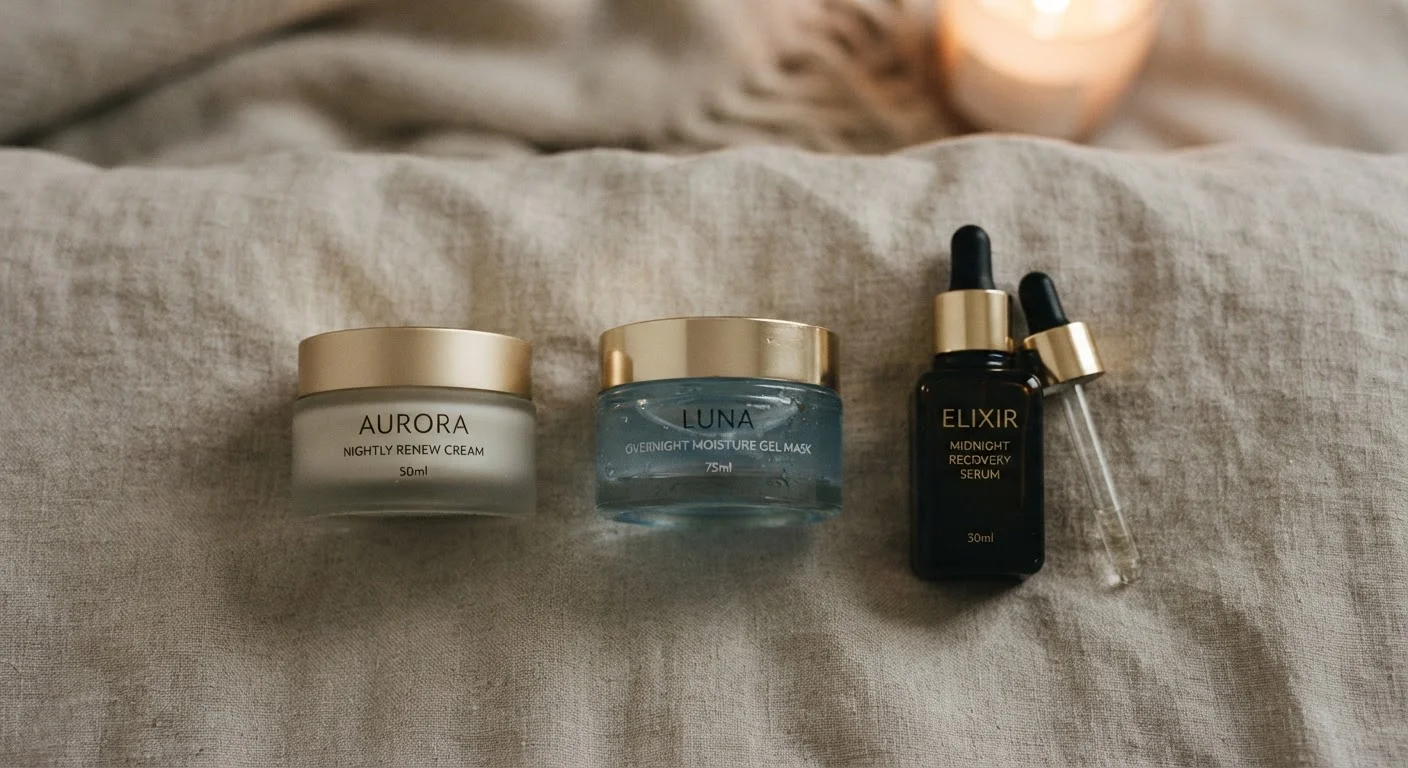
Our Verdict
Night creams, sleeping masks, and overnight serums are not interchangeable — each serves a distinct function. Night creams nourish consistently, sleeping masks intensify hydration on demand, and overnight serums target specific concerns with actives. Combining them strategically can maximize what your skin does naturally while you sleep.
| Best for | Recommended |
|---|---|
| Those with dry, sensitive, or mature skin needing daily nourishment | Night Cream |
| Anyone who wants a periodic deep-hydration boost or barrier reset | Sleeping Mask |
| Those targeting specific concerns like uneven tone, texture, or fine lines | Overnight Serum |
| Skincare enthusiasts who want maximum overnight results | All three layered in the correct order |
Why Nighttime Products Are a Category of Their Own
Your skin operates on a rhythm. During the day, it's in defense mode — protecting against UV exposure, pollution, and environmental stress. At night, it shifts into repair mode: cell turnover accelerates, collagen synthesis ramps up, and the skin barrier works to restore itself. Understanding this is the foundation of smart nighttime skincare.
To learn more about why the barrier is so central to everything your routine does, see what your skin barrier actually does. That repair window is exactly what night creams, sleeping masks, and overnight serums are designed to support — just in different ways.
The confusion kicks in because these three products often look similar on a shelf, and marketing language doesn't always make their differences clear. But each has a distinct texture, function, and ideal placement in your routine.
Night Creams: Your Everyday Barrier Supporter
A night cream is a moisturizer formulated for evening use. Compared to a daytime moisturizer, it typically skips SPF and leans richer — often incorporating emollients like shea butter or squalane, and humectants like glycerin or hyaluronic acid. Some also include low concentrations of active ingredients, such as peptides or niacinamide, aimed at overnight skin renewal.
Night creams are everyday workhorses. They're meant to be used consistently, every night, as the final or near-final step in your routine. They support the skin barrier rather than aggressively treating it, which makes them well-suited to dry, sensitive, and mature skin types. For oily or combination skin, a lighter gel-cream formula achieves a similar result without heaviness.
Think of Your Night Cream as Maintenance
Night creams support the baseline health of your skin barrier night after night. They create a stable foundation for any active ingredients layered underneath. Consistency matters more than the richness of the formula — even a lighter night cream used regularly will outperform a heavy one used sporadically.
Think of your night cream as maintenance — not treatment. It keeps the baseline healthy so that any active ingredients you apply underneath have a stable environment to work in.
Sleeping Masks: Periodic Intensity, Not Daily Habit
A sleeping mask — sometimes called an overnight mask or sleeping pack — is an occlusive or semi-occlusive layer applied as the very last step in your routine. Its job is to seal everything underneath it in place, slow transepidermal water loss (TEWL — the natural evaporation of moisture from skin), and create an environment that amplifies absorption while you sleep.
Most sleeping masks have a gel or balm texture and contain a mix of occlusives (like petrolatum or dimethicone), humectants, and sometimes brightening or soothing actives. Because they sit on top of everything, they aren't delivering deep penetration of actives — they're preserving what's already there.
Crucially, sleeping masks are not meant for nightly use by most people. Two to three times per week is a common dermatologist-suggested frequency. Using one every night can cause congestion, especially for acne-prone skin. Think of it as a hydration reset, not a daily step.
| Night Cream | Sleeping Mask | Overnight Serum | |
|---|---|---|---|
| Primary function | Moisturise and support barrier | Seal and intensify hydration | Deliver concentrated actives |
| Texture | Rich cream or gel-cream | Gel or balm, often tacky | Lightweight liquid or thin gel |
| Frequency of use | Nightly | 2–3 times per week | Nightly or as directed |
| Application order | After serum, before mask | Last step of routine | First step after toning |
| Best suited for | Dry, mature, or sensitive skin | All types needing a hydration boost | Targeting specific skin concerns |
| Key ingredient types | Emollients, humectants, peptides | Occlusives, humectants, soothers | Retinoids, AHAs, vitamin C, peptides |
Overnight Serums: Targeted Treatment While You Rest
An overnight serum is a concentrated treatment product — lighter in texture than a cream but packed with active ingredients designed to address specific concerns. Common actives include retinol or retinoids for cell turnover, vitamin C derivatives for brightening, alpha hydroxy acids (AHAs) for exfoliation, and peptides for firmness.
Because serums have smaller molecule structures, they penetrate more readily than creams. They go on before your night cream or sleeping mask, not after. If you're using a retinol-based serum, knowing the strength of the ingredient matters for managing sensitivity.
One important caution: some active ingredients shouldn't be layered together. Mixing certain acids with retinoids, for example, can irritate skin rather than improve it. Our guide on ingredients that don't play well together is worth reading before building a multi-step active routine.
How to Layer All Three (Without Overdoing It)
If you choose to use more than one of these products, application order matters. The general rule: thinnest to thickest, most active to most occlusive.
- Overnight serum — applied first, on clean skin after toning if you use one.
- Night cream — smoothed over the serum to lock it in and add barrier-supporting nourishment.
- Sleeping mask — on nights you use one, applied last as a finishing seal.
Not every night calls for all three. A practical approach: use your overnight serum and night cream nightly (or as directed on active-containing products), and reach for the sleeping mask when your skin feels stressed, dry, or depleted — after travel, during seasonal changes, or following a week of heavy active use.
For a broader look at how these steps fit into your full evening wind-down, building a morning routine from the ground up covers complementary AM habits that support what you do at night. And if you ever want to decode what's actually in any of these products, reading a skincare label gives you the tools to understand ingredient lists with confidence.
This article is for general informational and educational purposes only. If you have skin concerns, sensitivities, or a diagnosed skin condition, consult a qualified dermatologist before changing your skincare routine.
The content on this site is for informational purposes only and is not a substitute for professional advice. Always consult a qualified professional for guidance specific to your situation.