

Start here
Why Men's Skin Is Worth Paying Attention To
Next
Know Your Skin Type First
Then
The Three Products You Actually Need
Apply it
Building Your Daily Routine
Avoid pitfalls
Common Beginner Mistakes to Sidestep
Why Men's Skin Is Worth Paying Attention To
Skincare has long been marketed almost exclusively to women, which has left a lot of men operating with a bar of soap and a vague sense that that's probably fine. It's not quite — and the good news is that doing better doesn't require an elaborate shelf of products or a new personality.
Men's skin has some real biological differences worth knowing about. It tends to be about 25% thicker than women's skin, produces significantly more sebum (oil), and is subjected to the repeated mechanical stress of shaving. These factors don't make skincare more complicated — they just make the right starting choices more specific. Understanding what your skin barrier actually does is a great foundation before picking any product, and our guide on how the skin barrier works breaks that down clearly.
The goal here isn't perfection. It's giving your skin the basic support it needs so it can do its job — protecting you from environmental stressors, regulating moisture, and staying resilient over time.
Know Your Skin Type First
Buying products before you know your skin type is the single most common beginner mistake. It leads to the wrong formula landing on your face and potentially making things worse.
Sebum
The natural oil your skin produces to stay lubricated and protected. Too much leads to shine and breakouts; too little causes dryness and tightness.
Skin barrier
The outermost layer of skin that acts as a protective shield, keeping moisture in and irritants out. A damaged barrier makes skin reactive and prone to dryness.
Broad-spectrum SPF
A sunscreen that protects against both UVA rays (which cause aging) and UVB rays (which cause burning). The SPF number indicates protection level against UVB.
T-zone
The forehead, nose, and chin area of the face — shaped like a T — which tends to be oilier than the rest of the face in many skin types.
Fragrance-free
A product that contains no added fragrance ingredients, which are among the most common causes of skin irritation and allergic reactions in skincare.
Here's a simple self-assessment. An hour after washing your face with nothing applied, observe how it feels:
- Normal: Comfortable, not tight or shiny. Lucky you — most products will work well.
- Oily: Shiny across the forehead, nose, and chin (the T-zone). Pores may look enlarged.
- Dry: Tight, flaky, or rough — especially around the cheeks and jaw.
- Combination: Oily in the T-zone, drier on the cheeks. The most common type.
- Sensitive: Reacts easily to products with redness, stinging, or itching. Fragrance-free formulas are your friend.
Your skin type can shift with seasons, age, and lifestyle changes, so it's worth reassessing occasionally rather than treating it as fixed forever.
The Three Products You Actually Need
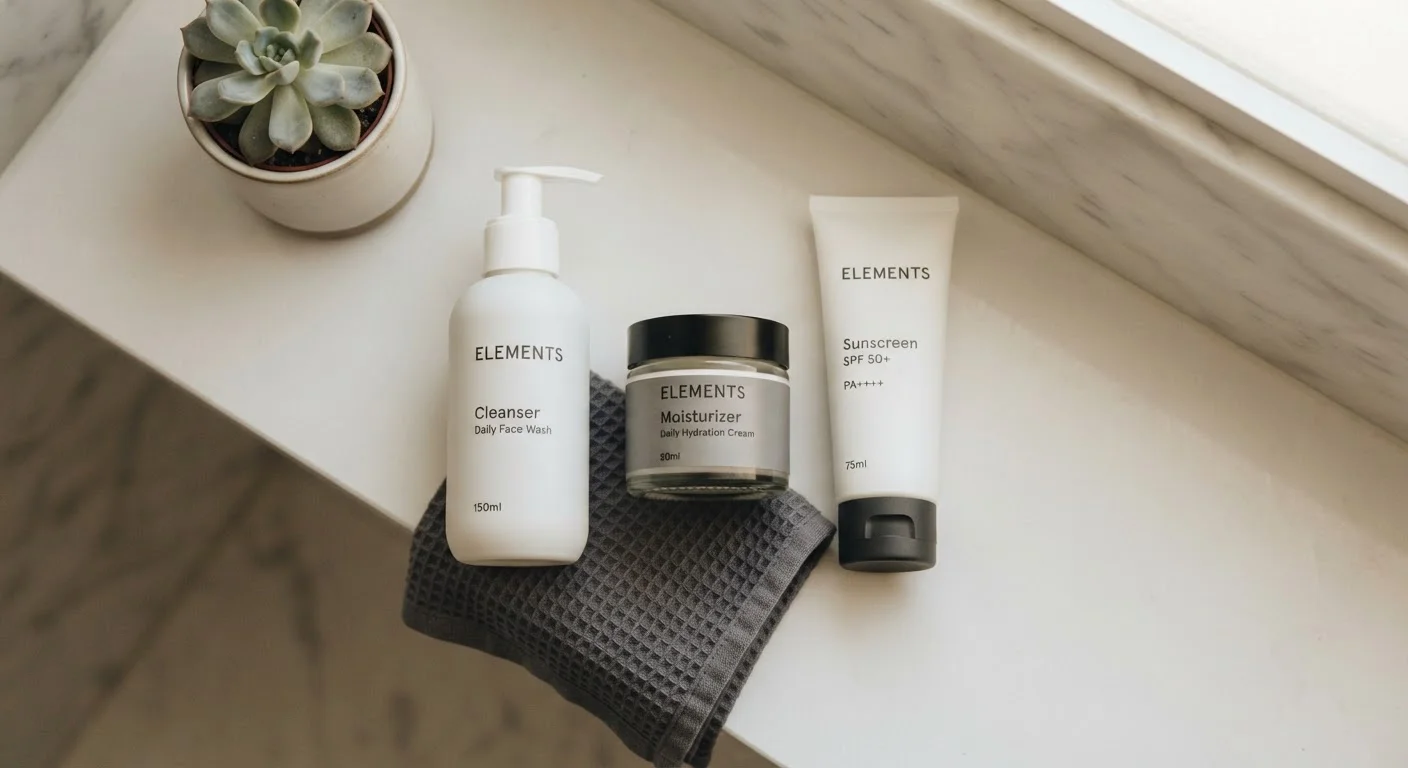
Skincare doesn't need to be a ten-step ritual. For most men starting out, three products are genuinely sufficient — and adding more too fast is counterproductive because you won't know what's helping or causing a problem.
1. A Gentle Cleanser
Cleansing removes dirt, oil, sweat, and pollution that accumulate on skin throughout the day. Look for a formula labeled "gentle" or "non-stripping" — harsh cleansers disrupt the skin barrier and are especially problematic for men who shave regularly. Avoid heavily fragranced options if your skin tends toward sensitivity.
2. A Moisturizer
Even oily skin needs moisture — without it, skin overcompensates by producing more oil. For oily or combination skin, a lightweight, oil-free gel or fluid works well. For dry or normal skin, a cream formula provides more lasting hydration. Apply while skin is still slightly damp to lock in moisture more effectively.
3. Broad-Spectrum SPF 30+ Sunscreen
This is non-negotiable. UV exposure is the leading cause of visible premature skin aging and contributes to skin cancer risk. Dermatologists consistently identify daily sunscreen as the highest-impact skincare habit anyone can develop. Many moisturizers include SPF, which simplifies the routine — just confirm it's labeled "broad-spectrum."
One Product at a Time Wins
Resist the urge to buy a full lineup all at once. Start with just a cleanser, moisturizer, and SPF — use them consistently for two to four weeks before adding anything else. This approach helps you spot what works (and what doesn't) without overwhelming your skin or your budget.
Once these three feel natural, you can explore extras like a structured morning layering routine or nighttime-specific products.
Building Your Daily Routine
The order you apply products matters because skin can only absorb what reaches it. A simple rule: thinnest to thickest. Lighter water-based products go on before heavier creams, and SPF always goes on last in the morning.
Morning: Cleanser → Moisturizer → SPF
Evening: Cleanser → Moisturizer
If you shave in the morning, treat it as part of your skincare sequence. Shaving mechanically exfoliates and stresses the skin barrier, so applying moisturizer after is especially important on shaving days. Avoid active ingredients like retinol or acids immediately after shaving — they'll sting and may irritate freshly stressed skin.
Consistency is the real active ingredient here. A simpler grooming routine done consistently will outperform a complicated one done sporadically every single time. Attaching your routine to an existing daily habit — brushing your teeth, for instance — makes it significantly easier to stick to.
Common Beginner Mistakes to Sidestep
Starting skincare is straightforward, but a few common missteps can slow your progress or cause unnecessary irritation.
Don't Skip the Patch Test
Whenever you introduce a new product, apply a small amount to the inside of your wrist or behind your ear for two to three days before using it on your face. This simple step can help you catch sensitivities before they become a full-face problem — particularly important for men with sensitive or reactive skin.
- Introducing too many products at once. If something irritates your skin, you won't know what caused it. Introduce one new product at a time, with at least a week between additions.
- Skipping SPF on cloudy days. UV rays penetrate clouds and glass. Broad-spectrum SPF is a daily habit, not a sunny-day habit.
- Using hot water. Hot water strips the skin's natural oils and can worsen dryness and sensitivity. Lukewarm is the sweet spot.
- Over-exfoliating. Physical scrubs used too aggressively — especially right after shaving — damage the skin barrier. If you want to exfoliate, keep it to once or twice a week at most and choose a gentle formula.
- Expecting overnight results. Skin cell turnover takes roughly four to six weeks. Give products time to work before deciding they're not working.
As your confidence grows, you might find it useful to learn to read a skincare label so you can make informed choices without relying on marketing language. And if you're also thinking about your hair, our hair care routine starter guide takes the same approachable angle.
This article is for general informational purposes only and is not a substitute for professional medical or dermatological advice. If you have concerns about a skin condition, consult a qualified healthcare provider.
Frequently Asked Questions
Yes — skin is an organ that requires basic maintenance regardless of gender. Cleansing, moisturizing, and sun protection reduce the risk of premature aging, irritation, and skin damage. A minimal routine done daily is far more effective than doing nothing.
Three steps cover the fundamentals: a gentle cleanser morning and night, a moisturizer after cleansing, and a broad-spectrum SPF 30+ sunscreen each morning. Once those feel natural, you can layer in extras if needed.
Twice daily — once in the morning and once at night — is the standard dermatologist recommendation. Over-washing strips the skin's natural oils and can trigger more oil production, particularly in men with oily skin.
Structurally, yes. Research indicates men generally have thicker skin, higher collagen density, and produce more sebum (oil) than women. Shaving also introduces unique friction and barrier disruption that most women's routines don't need to account for.
In most cases, yes — especially for beginners. A simple, unfragranced moisturizer works fine around the clock. As your routine matures, you might explore nighttime-specific options for added benefits.
Hydration improvements are often noticeable within days. Improvements in texture, tone, and clarity typically take four to eight weeks of consistent use. Skin turns over slowly, so patience is genuinely part of the process.
The content on this site is for informational purposes only and is not a substitute for professional advice. Always consult a qualified professional for guidance specific to your situation.