

Our Verdict
Smart thermostats offer genuine advantages in energy management, scheduling flexibility, and remote control — but they come with real prerequisites. Compatibility, reliable Wi-Fi, and a willingness to spend time on setup all matter. For homeowners with standard HVAC systems and consistent routines, the payoff is usually worth it. For renters, older systems, or households resistant to app-based controls, the trade-offs deserve careful thought.
Homeowners with compatible HVAC systems who want more control over their energy use and are comfortable managing basic app-based settings.
What a Smart Thermostat Actually Does Differently
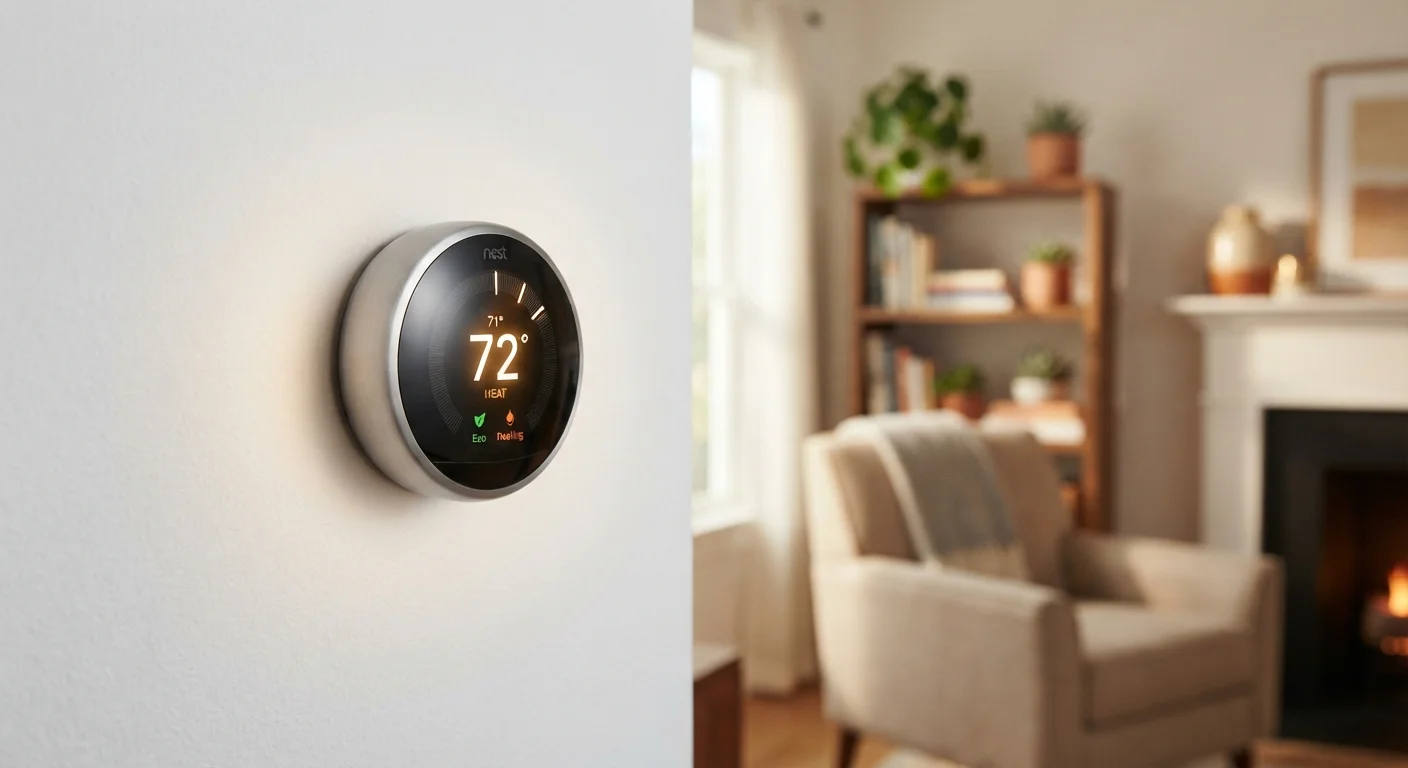
A conventional programmable thermostat lets you set a fixed schedule — heat to 70°F at 7 a.m., drop to 62°F at night. A smart thermostat builds on that foundation by connecting to your home Wi-Fi, communicating with an app on your phone, and in some cases, learning from your behavior over time.
The practical difference is flexibility. Instead of being locked into a schedule you programmed once and forgot, you can make adjustments from anywhere, receive alerts if something seems off, and review how much your system has been running. Some models can even detect when no one is home using your phone's location and dial back accordingly.
If you're new to connected home devices, it's worth understanding how a smart thermostat fits into the broader ecosystem. Our guide to getting started with smart home devices covers how these products connect and interact. You can also check the Connected Home Glossary for definitions of terms like C-wire, geofencing, and HVAC that come up frequently during setup.
The Real Advantages
The strongest case for a smart thermostat is energy management that actually fits your life rather than a rigid preset schedule.
Reduces energy use through smarter scheduling
Smart thermostats can automatically lower heating or cooling when you're away and restore comfort before you return. This kind of set-and-forget scheduling tends to cut wasted energy without requiring daily attention.
Remote control from anywhere with Wi-Fi
Adjusting your home's temperature from your phone — whether you're stuck at work or returning early from a trip — eliminates the frustration of coming home to an uncomfortable house.
Usage reports help you understand your patterns
Many models generate monthly energy reports that show when your system runs longest and where usage spikes occur. That visibility alone can prompt behavior changes that save money.
Integrates with other smart home devices
Smart thermostats can often connect to smart speakers, hubs, and occupancy sensors, enabling automations like adjusting temperature when a door opens or all lights turn off.
Some models learn your preferences automatically
Learning thermostats observe your manual adjustments over days or weeks and build a schedule that reflects your actual preferences — no programming required.
Beyond energy savings, the integration potential is worth noting. Smart thermostats can communicate with other devices on your home network. If you're curious how that fits together, see our explainer on smart speakers, displays, and hubs and everything that lives on your home network.
The Trade-Offs to Weigh Honestly
No connected device is without friction, and smart thermostats are no exception. The issues below aren't reasons to avoid them — but they are reasons to go in with clear expectations.
Compatibility is not universal
Older HVAC systems, multi-stage heat pumps, and systems without a common (C) wire may not work with many smart thermostats. Checking compatibility before purchase is critical and can rule out several models entirely.
Requires reliable Wi-Fi to function fully
Remote control, software updates, and cloud-based features all depend on a stable internet connection. A router outage or a weak signal near the thermostat can leave you with a device that behaves like a basic programmable model.
Installation can be more complex than expected
Wiring varies by system, and some homes require a C-wire adapter or professional installation. Mistakes during wiring can damage the thermostat or HVAC system, so DIY confidence matters here.
Data privacy is a genuine concern
Smart thermostats collect data about your daily schedule and occupancy patterns. That information is processed by the manufacturer's servers, which means understanding their privacy policy is worth your time.
Not practical for most renters without landlord approval
Installing a smart thermostat typically involves replacing existing hardware, which usually requires written landlord permission. Even then, you'd likely need to reinstall the original unit when you move out.
Software updates can change behavior unexpectedly
Like any connected device, smart thermostats receive firmware updates that occasionally alter menus, features, or scheduling logic — sometimes without much user notice.
Renters: Check Before You Install
Smart thermostats are considered a modification to the rental unit in most lease agreements. Before purchasing one, review your lease and get explicit written permission from your landlord. You may also be required to restore the original thermostat when your lease ends. For more guidance on navigating home upgrades as a renter, see the Renting Smart hub.
Before You Install: Compatibility and Setup
The single most important step before purchasing a smart thermostat is verifying that your HVAC system will work with it. Most manufacturers provide an online compatibility checker that walks you through your existing wiring. You'll typically need to photograph the terminals on your current thermostat's base — labels like R, G, Y, W, and C indicate which wires are present.
If a C-wire (common wire) is missing, some thermostats include an adapter; others require a separate add-a-wire kit or an electrician. High-voltage systems (common in older apartments with electric baseboard heat) are generally incompatible with low-voltage smart thermostats altogether.
~8%
Estimated heating savings from setback scheduling
The U.S. Department of Energy estimates you can save around 8% on heating and cooling costs for every degree you set back your thermostat for eight hours per day.
C-wire
Most common installation compatibility hurdle
Many smart thermostats require a common wire (C-wire) to maintain constant low-voltage power; older homes without one may need an adapter or electrician visit.
Once you've confirmed compatibility, most installations take 30–60 minutes for someone comfortable with basic wiring. If you're uncertain, hiring an HVAC technician for installation is a reasonable precaution — the cost of a damaged control board on your furnace far exceeds any installation fee.
It's also worth thinking about how your thermostat will sit on your home network. A device that's too far from your router or on an overcrowded network may perform inconsistently. Our guide on what lives on your home network can help you assess whether your setup is ready.
The content on this site is for informational purposes only and is not a substitute for professional advice. Always consult a qualified professional for guidance specific to your situation.