

Why Dashboard Lights Exist (and Why You Shouldn't Ignore Them)
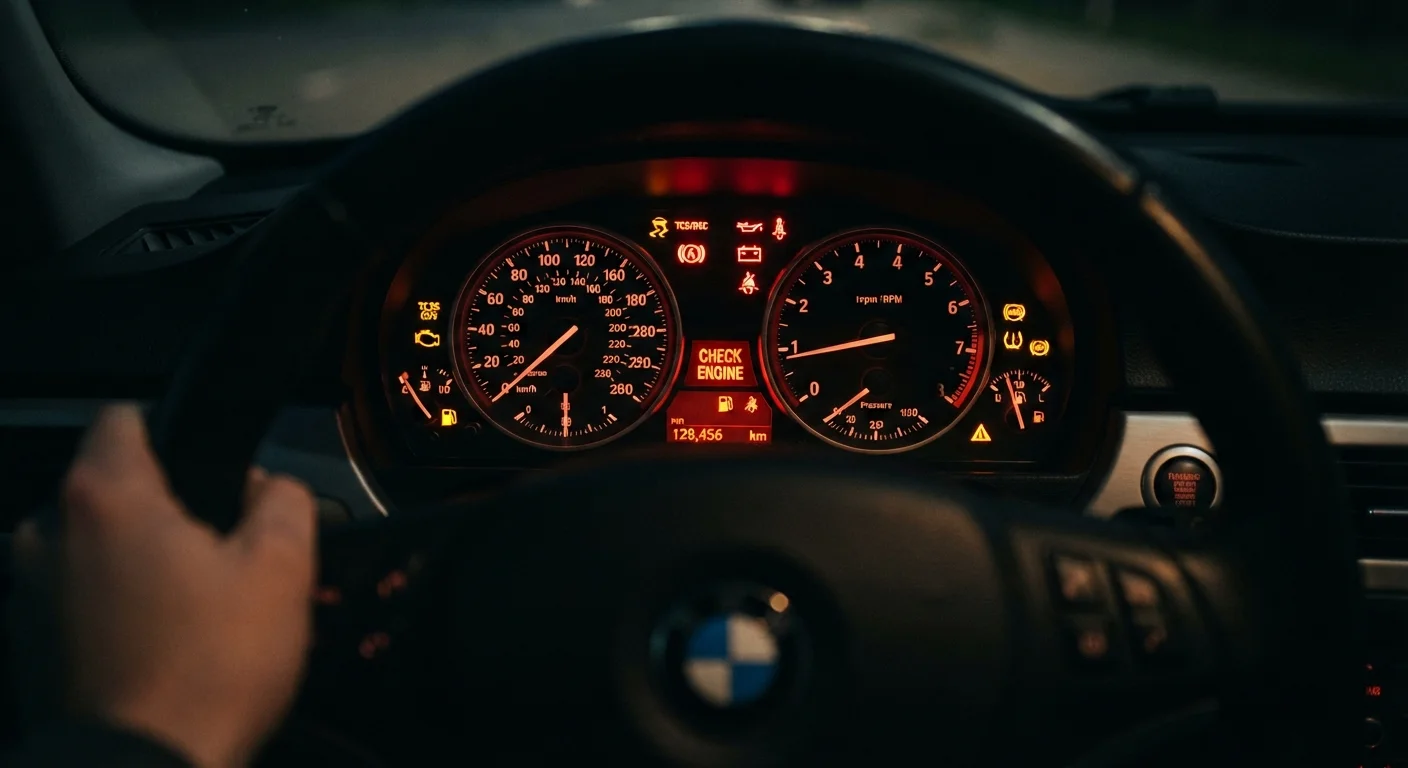
Modern vehicles are essentially computers on wheels, and dashboard warning lights are how they communicate problems to you. Each symbol is standardized by color — red means stop and act now, amber/yellow means investigate soon, and blue or green is informational. Understanding that hierarchy alone can help you decide whether to pull over immediately or schedule a service appointment within the week.
Ignoring warning lights is one of the most common ways a manageable repair becomes a catastrophic one. A $150 sensor fix can spiral into a $3,000 engine replacement if left unaddressed. Before you head to a shop, see our guide on questions to ask a mechanic so you walk in prepared.
| Color: Red | Stop driving when safe — immediate attention required |
| Color: Amber/Yellow | Service needed soon — monitor and schedule repair |
| Color: Blue/Green | Informational only — no action needed |
| Most common CEL cause | Loose or faulty gas cap (often fixable in seconds) |
| Free code reading | Available at many auto parts stores at no charge |
| Vehicles with OBD-II | All cars sold in the U.S. from model year 1996 onward (U.S. EPA standardization requirement) |
The Most Common Warning Lights Decoded
Here's a plain-English breakdown of the lights most drivers encounter:
Check Engine Light (CEL)
An amber light shaped like an engine silhouette that signals the vehicle's onboard diagnostics have detected a fault. Causes range from a loose gas cap to a misfiring cylinder — a diagnostic scan is the only way to know for certain.
Oil Pressure Warning
A red oil can symbol indicating dangerously low oil pressure in the engine. Continuing to drive with this light on can cause severe, often irreparable engine damage within minutes.
TPMS (Tire Pressure Monitoring System)
An amber tire cross-section symbol that activates when one or more tires drop significantly below their recommended pressure. Underinflated tires reduce fuel efficiency and increase blowout risk.
ABS Warning Light
An amber light reading 'ABS' that indicates a fault in the anti-lock braking system. Standard braking still functions, but the system that prevents wheel lock-up during hard stops may not engage.
Coolant Temperature Warning
A red thermometer symbol signaling the engine is overheating. Pull over safely and allow the engine to cool before inspecting coolant levels — never open a hot radiator cap.
OBD-II (On-Board Diagnostics)
A standardized port and system in vehicles made after 1996 that stores fault codes when the check engine light triggers. A scanner plugged into the OBD-II port reads those codes to identify the problem area.
A few lights deserve special mention. The tire pressure monitoring system (TPMS) light — a cross-section of a tire with an exclamation mark — activates when any tire drops about 25% below recommended pressure. Cold weather alone can trigger it as air contracts. Check and inflate tires before assuming the worst.
The battery light (a rectangle with plus and minus signs) rarely means your battery is simply old. More often it signals a failing alternator, a loose belt, or a corroded terminal. If this light comes on while driving, minimize electrical load — turn off the AC, radio, and any non-essential accessories — and head to a shop promptly. Running your vehicle until it stalls is hard on the entire charging system.
For context on how repair costs and neglected maintenance affect your car's long-term value, see why cars depreciate and what it means for owners.
What to Do When a Light Comes On
Your first step is always to check the owner's manual — it contains the exact meaning of every light specific to your make and model. Generic guides (including this one) describe the most common interpretations, but variations exist across manufacturers.
If a red light illuminates, don't delay: pull over when safe and assess. Red oil pressure or temperature lights in particular signal conditions that can destroy an engine within minutes of continued driving.
For amber lights, avoid the temptation to clear the code with an OBD-II scanner and forget about it. The light will return — and the underlying issue won't fix itself. Many auto parts stores offer free code reading, which gives you a starting point before authorizing any repair work.
Wondering which fixes you can tackle yourself versus which need a professional? Our breakdown on when DIY car maintenance makes sense gives you a clear-eyed look at the trade-offs.
Used Car Buyers: Check the History Report Too
If warning lights appeared frequently in a vehicle's past, evidence may show up in service records. Our guide on reading a vehicle history report explains which sections flag recurring mechanical issues. It's worth a look before any used-car purchase.
This article is for general informational purposes only. Always consult a qualified, licensed mechanic for diagnosis and repair decisions specific to your vehicle.
The content on this site is for informational purposes only and is not a substitute for professional advice. Always consult a qualified professional for guidance specific to your situation.