

Our Verdict
DIY car maintenance makes genuine sense for low-complexity, low-risk tasks where the cost savings are real and the margin for error is small. For anything touching your vehicle's safety systems, emissions controls, or complex electronics, the risks outweigh the savings — and a qualified mechanic is the right call. Knowing the difference is the skill every driver should develop.
Drivers who want to reduce routine maintenance costs and build vehicle literacy, while still recognizing when professional expertise is non-negotiable.
The Case for Doing It Yourself
For millions of American drivers, rolling up their sleeves for routine upkeep isn't just about saving money — it's about understanding the machine they depend on every day. And for a meaningful range of tasks, the DIY path is genuinely practical.
Significant savings on routine labor costs
Many straightforward tasks that shops charge $60–$150 for can be completed at home in under an hour with minimal tools, adding up to real annual savings.
Builds practical vehicle knowledge
Understanding how your car works makes you a more informed consumer when you do visit a shop — less likely to approve unnecessary repairs or miss early warning signs.
Flexible scheduling, no appointment needed
Routine tasks like checking tire pressure or swapping wipers can happen on your timeline, not around shop hours or waitlists.
Satisfaction and sense of self-sufficiency
There's genuine value in knowing you can handle basic upkeep — and it often motivates drivers to stay on top of their maintenance schedule more consistently.
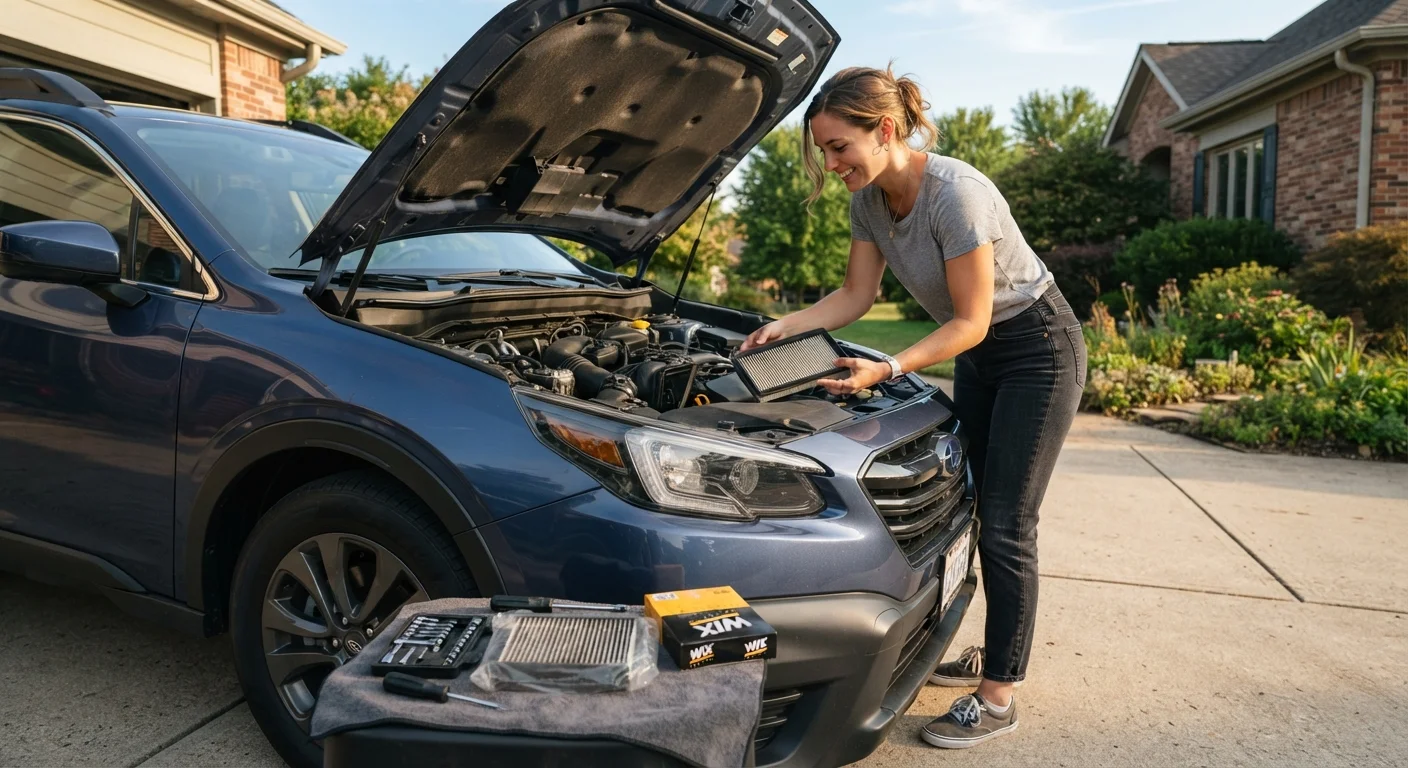
Air filter replacements, cabin filter swaps, windshield wiper installations, and bulb changes are almost universally straightforward. Most require only basic tools and a 20-minute commitment. Checking and topping off fluids — coolant, washer fluid, power steering fluid — is similarly accessible. Even checking tire pressure and tread depth (using a simple gauge or a penny) are habits that pay off in safety and fuel efficiency. See our guide to tire care for a full breakdown.
The savings can add up meaningfully over time. Labor rates at independent shops typically run $80–$150 per hour; dealerships often charge more. Tasks that take a mechanic 30 minutes can cost you $60–$100 in labor alone. Doing those same tasks yourself — once you know how — puts that money back in your pocket without compromising the vehicle.
Where DIY Gets Risky
The flip side is equally important, and skipping it would give drivers a false sense of what's manageable at home.
Safety risk when skills don't match the task
Brake, steering, and suspension systems are safety-critical. Errors in these areas can have serious consequences that no cost savings justify.
Potential to void manufacturer warranties
Certain DIY repairs on vehicles still under warranty — particularly drivetrain or emissions-related work — may complicate warranty claims if something goes wrong.
Upfront tool investment can erode savings
Some jobs require specialty tools that cost more than the repair itself. Without the right equipment, a 'simple' task can quickly become a frustrating and expensive mistake.
Misdiagnosis leads to wasted parts and time
Without professional diagnostic equipment, it's easy to replace a component that wasn't actually the source of the problem — compounding the original cost.
Legal disposal requirements add complexity
Used motor oil and certain other fluids must be disposed of according to state environmental law, which requires an extra step most first-timers don't anticipate.
Brake jobs — replacing pads, rotors, or calipers — are a particularly common area where overconfident DIYers get into trouble. An improperly bled brake line or a misinstalled caliper can mean zero stopping power at 60 mph. That's not a recoverable mistake. Similarly, suspension work, wheel bearing replacements, and anything involving the airbag system or supplemental restraint wiring should go to a licensed mechanic without debate.
Modern vehicles also carry significant electronic complexity. Resetting certain warning lights, reprogramming sensors, or diagnosing fault codes properly often requires professional-grade scan tools — not the basic OBD-II readers available at auto parts stores. Misdiagnosing an issue and replacing the wrong component is expensive and frustrating.
There's also the warranty dimension. If your vehicle is still under a manufacturer's powertrain warranty, some DIY repairs — especially those involving the drivetrain or emissions systems — can complicate future claims. Check your warranty documentation before proceeding. For perspective on how similar trade-offs play out in home upkeep, the DIY vs. hiring a pro framework is a useful reference.
The Tasks That Belong in Each Column
Drawing a clear line helps. Here's a practical framework based on complexity, safety stakes, and required tools:
| Generally DIY-Friendly | Leave to a Professional |
|---|---|
| Air & cabin filter replacement | Brake pad/rotor replacement |
| Windshield wipers | Wheel bearing replacement |
| Exterior bulb replacement | Suspension components |
| Fluid top-offs (washer, coolant) | Airbag or SRS system work |
| Tire pressure checks | Transmission service |
| Battery terminal cleaning | Timing belt/chain replacement |
$80–$150/hr
Typical shop labor rate in the U.S.
According to general industry estimates, independent shops commonly charge in this range, with dealerships often billing higher.
~35%
U.S. drivers who perform some DIY maintenance
Consumer surveys consistently show a significant minority of American drivers handle at least some routine maintenance tasks at home.
Oil changes occupy a middle ground. Many experienced owners handle them confidently, but proper disposal of used oil is required by law in most states, and overtightening or undertightening the drain plug is a common mistake. If you do attempt it, consult your owner's manual — not what a quick-lube shop tells you — for the correct interval and oil specification. Our oil change interval guide explains the gap between manufacturer guidance and common shop recommendations.
Making the Right Call for Your Situation
Your comfort level, tool access, and available time all factor into the equation. A driver with a basic socket set, a reliable online repair community (such as vehicle-specific forums), and a free Saturday afternoon is in a genuinely different position than someone working in a cramped apartment lot with no tools.
Before You Visit a Mechanic
Even when a job clearly belongs with a professional, going in prepared makes a real difference. Knowing what symptoms to describe, which questions to ask, and what a reasonable quote looks like helps you avoid unnecessary work and builds trust with your shop. A little prep goes a long way.
Before heading to a shop for any repair, it pays to do a little homework. Our mechanic visit prep guide walks you through the right questions to ask — helping you understand the work being quoted and avoid unnecessary upsells.
One principle applies universally: your owner's manual is the ground truth. Manufacturer maintenance schedules are engineered for your specific vehicle — not for the generic advice printed on oil jugs or the upsell prompts on a service invoice. Building the habit of consulting it is free, takes seconds, and prevents a surprising number of problems. For a seasonal lens on what to check and when, the seasonal car prep guide is worth bookmarking.
This article provides general vehicle maintenance information for educational purposes only. Always consult a qualified, licensed mechanic for repairs involving safety systems or tasks beyond your verified skill level.
The content on this site is for informational purposes only and is not a substitute for professional advice. Always consult a qualified professional for guidance specific to your situation.