

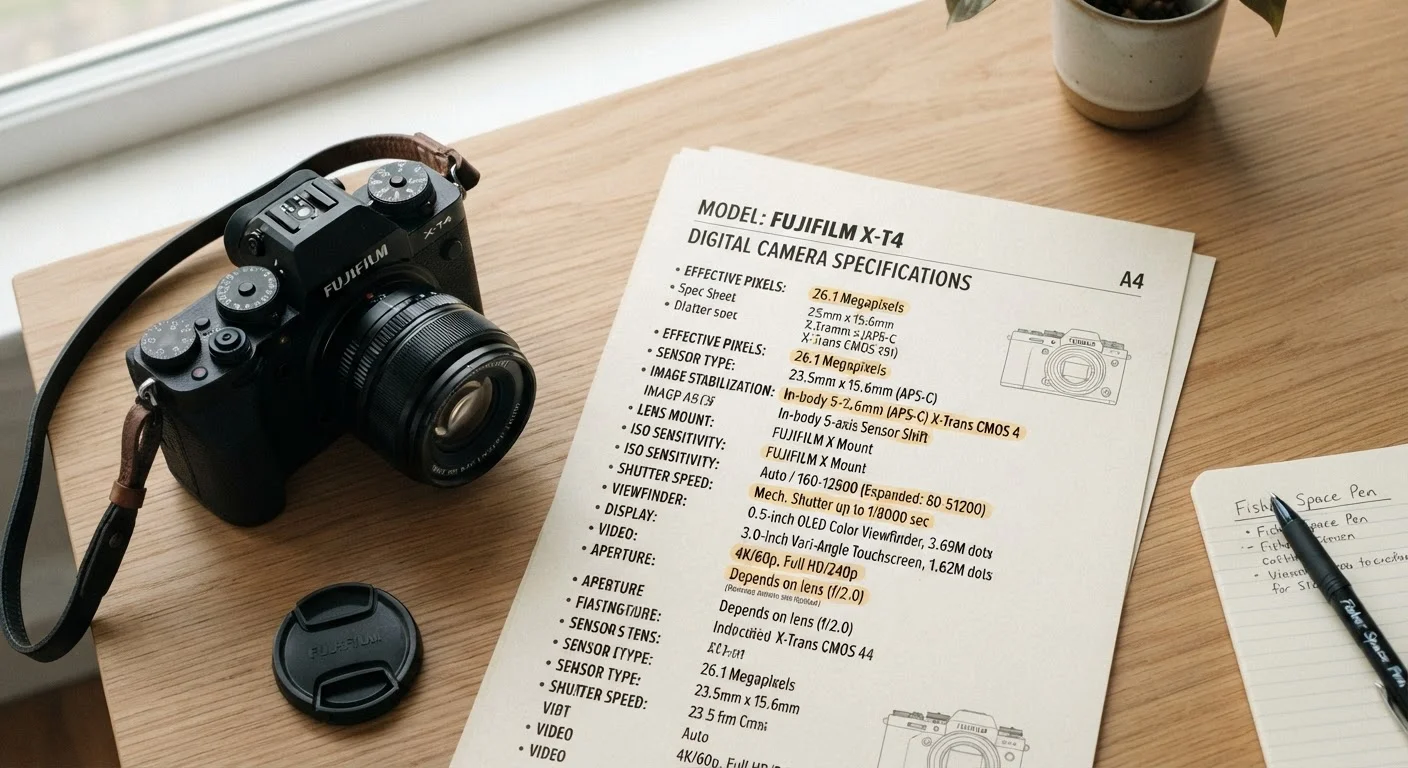
Megapixels: The Most Misunderstood Number
Megapixels are the first number marketed on almost every camera, yet they're also the most frequently misunderstood. A megapixel simply counts how many pixels are packed into an image — more pixels means larger prints without pixelation, and the ability to crop heavily while keeping detail. That's genuinely useful, but it says nothing about color accuracy, dynamic range, or how the camera performs in low light.
A 50-megapixel sensor crammed onto a tiny chip (as found in many budget smartphones) often produces noisier, less accurate images than a 12-megapixel camera with a physically larger sensor and better optics. For everyday users printing standard sizes or sharing photos on screens, anything above 12 megapixels is more than sufficient. Beyond that, other specs matter far more.
For a broader look at how hardware specs can mislead, see our guide to RAM, storage, and processing power.
| What megapixels measure | Image resolution (pixel count), not overall quality |
| Aperture notation | Lower f-number = wider opening = more light |
| Optical vs. digital zoom | Optical preserves quality; digital crops and degrades |
| Sensor size impact | Larger sensor = better low-light and dynamic range performance |
| ISO range relevance | Max ISO matters less than how cleanly the sensor handles it |
| Most overhyped spec | Raw megapixel count on small sensors |
Aperture and Sensor Size: The Specs That Actually Drive Image Quality
If megapixels are overrated, aperture and sensor size are the underrated pair that most directly determine how your photos look. Aperture — expressed as an f-number — controls light intake and depth of field. A lens rated f/1.8 lets in significantly more light than one rated f/3.5, which is why wide-aperture lenses are prized for indoor and evening photography. They also create that soft, blurred background (called bokeh) associated with professional portraits.
Sensor size is the physical dimension of the chip capturing light. Larger sensors collect more photons per pixel, which translates directly into cleaner images in dim environments, more natural color gradation, and greater dynamic range — the ability to hold detail in both bright highlights and deep shadows simultaneously.
Specs Interact — Context Always Matters
No single spec tells the full story. A camera with a high megapixel count but a tiny sensor and a slow aperture can easily produce worse photos than one with half the resolution and better optics. When reading any spec sheet, consider how the numbers work together rather than evaluating each in isolation.
This is why many photographers consider a camera with a large sensor and modest megapixel count a better tool than one advertising a high pixel count on a small sensor. The laws of physics favor surface area.
Similar dynamics apply to smartphone displays — technology and physical design often matter more than a single headline number. Our display technology explainer walks through the same principle for screens.
Optical Zoom vs. Digital Zoom — and Why the Difference Is Huge
The word "zoom" on a camera spec sheet can mean two very different things, and conflating them is one of the most common mistakes when comparing cameras.
Optical zoom works by physically adjusting glass elements inside the lens to magnify a subject — the way a telescope or binoculars do. Because actual light paths change, the image quality is fully preserved at any optical zoom level.
Digital zoom, by contrast, is software math. The camera crops the center of the image and stretches it to fill the frame. No new detail is added; what exists is simply enlarged. The result looks similar at low zoom levels but degrades noticeably as magnification increases — especially when printing or cropping further.
When a spec sheet lists a large total zoom number (say, "60x zoom"), check whether that includes digital zoom. A camera offering 30x optical and 60x total zoom is being somewhat generous with its advertising. For most real-world photography, a higher optical zoom range is the figure worth paying attention to.
Megapixel
A unit equal to one million pixels. It describes how many individual points of color make up a digital image. Higher megapixel counts allow for larger prints but do not directly determine image quality.
Aperture (f-stop)
The opening in a camera lens that controls how much light reaches the sensor. A lower f-number (like f/1.8) means a wider opening, more light, and a blurrier background. A higher f-number (like f/11) means a smaller opening and more of the scene in sharp focus.
Sensor Size
The physical dimensions of the camera's light-capturing chip. Larger sensors gather more light, which generally produces better image quality — especially in dim conditions — than smaller sensors found in most phone cameras.
Optical Zoom
Zoom achieved by physically moving glass elements inside the lens to bring a subject closer. This preserves image quality, unlike digital zoom, which simply crops and enlarges the existing image, causing visible pixelation.
Digital Zoom
A software-based method that magnifies the center of an image by cropping it and stretching the remaining pixels. It does not add detail and can noticeably degrade image sharpness.
ISO
A measure of the sensor's sensitivity to light. Higher ISO settings let you shoot in low light but typically introduce grain or 'noise' into the image. Better sensors handle high ISO values more cleanly.
Understanding how individual specs work is just one layer. Our smartphone specs guide shows how the same evaluation approach applies across all your devices.
The content on this site is for informational purposes only and is not a substitute for professional advice. Always consult a qualified professional for guidance specific to your situation.